

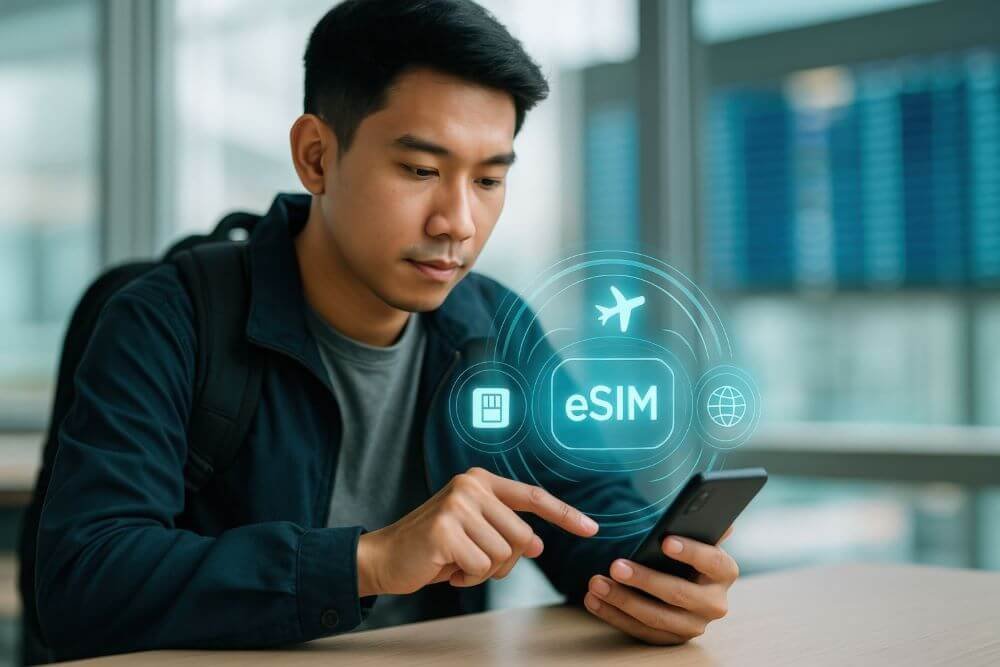
Southeast Asia, a region renowned for its stunning beaches, ancient temples, vibrant cities, and lush rainforests, remains a premier destination for global travelers. Navigating this diverse and dynamic part of the world, however, requires reliable connectivity for everything from translating languages and accessing digital maps to sharing experiences in real-time. While traditional SIM cards have long been the go-to solution, the advent of international eSIM technology revolutionizes the travel experience, offering unprecedented convenience and flexibility.
Here’s how international eSIM supports Southeast Asia travel:
The Limitations of Traditional Connectivity Methods
For years, travelers to Southeast Asia had two primary options for mobile data,: relying on expensive international roaming plans from their home carrier or purchasing a local physical SIM card upon arrival. Roaming, while convenient, typically comes with exorbitant data usage costs. The local SIM alternative, although more affordable, presents its own set of challenges. Tourists must locate a vendor at the airport or in a city center, often after a long flight, and navigate the registration process, which can require a passport and involve language barriers.
Furthermore, physically swapping a tiny, fragile SIM card can be inconvenient and risk damaging the device’s slot. For those visiting multiple countries, such as on a trip spanning Thailand, Vietnam, and Indonesia, this process would need to be repeated at each border, consuming valuable vacation time.
Understanding the eSIM Advantage
An eSIM refers to a digital SIM that enable users to activate a mobile plan from a carrier without owning a physical SIM. The technology is built directly into newer smartphones, tablets, and wearables. For travelers, this can represent a shift. Instead of searching for a local provider, one can research and purchase a data plan online before even departing. This modern solution eliminates the hassle of physical handling and provides a seamless way to stay connected.
For instance, for those traveling to Southeast Asian countries like the Philippines, they can secure a Philippines SIM Card digitally, ensuring they have data the moment they land in Manila. This pre-departure activation can be a significant upgrade, turning what was once a post-arrival chore into a simple, pre-travel task.
Seamless Multi-Country Itineraries
One of the most compelling benefits of an international eSIM for Southeast Asia travel is its support for complex, multi-country itineraries. The region’s proximity and excellent transportation links encourage travelers to explore several nations in a single trip. For example, a tourist might start in Singapore, then travel overland to Malaysia, before flying to the islands of Thailand. With a traditional SIM, this would require three separate purchases and activations.
An international eSIM provider, however, often offers regional data packages that cover numerous countries within a single plan. This allows for uninterrupted connectivity as one crosses borders; the service switches automatically to the best available local network without any action required from the user. This continuity is invaluable for using ride-hailing apps, navigating transit systems, and maintaining uninterrupted communication.
Enhanced Convenience and Security
The convenience of eSIM technology extends beyond border crossings. The ability to install and activate a plan remotely means travelers can hit the ground running. They can use mapping services to find sustainable accommodations, such as resorts, translate menus, or contact a tour guide immediately upon arrival. This immediacy enhances both safety and the overall travel experience.
Additionally, eSIMs provide an extra layer of security. Travelers can maintain their primary phone number for two-factor authentication and important calls while using the local data plan for all internet needs. This dual-number capability, typically managed through a phone’s settings, means one doesn’t have to sacrifice the security of their home number for the affordability of local data.
Cost-Effectiveness and Flexibility
International eSIM plans are typically designed with travellers in mind, offering competitive and transparent pricing. Users pay for a specific data allowance for a set duration, avoiding the bill shocks associated with international roaming. The flexibility is also a key advantage. Many providers allow users to top up data if they exhaust their initial package or extend the validity period if their travel plans change. This level of control is far superior to the rigid, often confusing terms of a physical SIM card purchased from a street vendor.
The digital nature of eSIMs also means that comparing plans and prices from different global providers is straightforward, empowering consumers to make the most informed and economical choice for their specific journey.
Key Takeaway
As smartphone manufacturers increasingly incorporate eSIM capability into their devices, the adoption of this technology is set to become the global standard for travelers. In a region as interconnected and digitally progressive as Southeast Asia, the shift towards eSIMs can be a natural evolution. It aligns with the modern traveler’s expectation for seamless, efficient, and intelligent solutions that enhance their journey rather than complicate it.
Therefore, with the information mentioned above in mind, international eSIM technology isn’t just a convenience but a fundamental tool that supports deeper exploration, richer experiences, and greater peace of mind for every adventurer discovering the wonders of Southeast Asia.



