

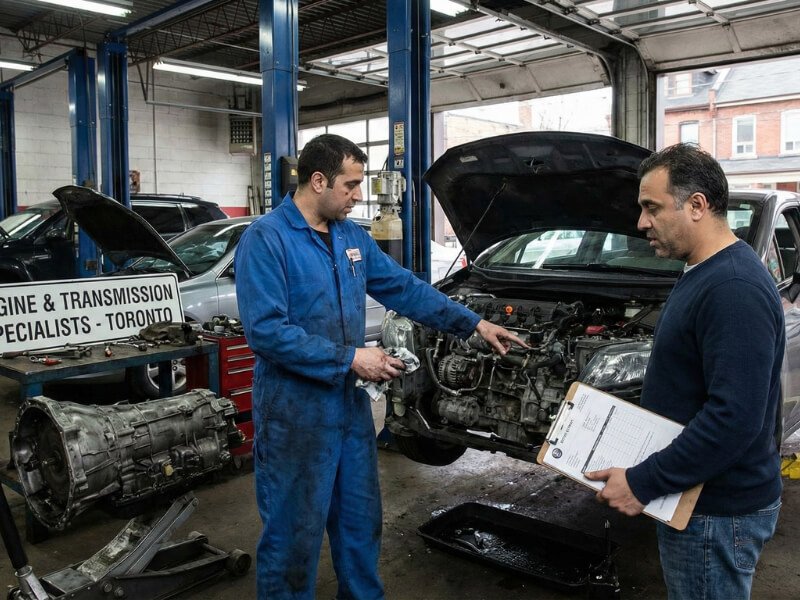
For many vehicle owners, the rhythmic clanking of a rod knock or the sudden loss of power from a slipping transmission signals a moment of acute financial stress. These are not routine maintenance issues like brake pads or oil changes; they are terminal failures that force an immediate evaluation of the vehicle’s viability. When facing a repair estimate that rivals the car’s actual market value, the decision often shifts from “how to fix it” to “how to exit.”
In the high-cost environment of Toronto, where mechanical labor rates and parts scarcity drive up bills, utilizing a specialized removal service like ScrapCarsGTA is often a far more fiscally sound strategy than authorizing a major rebuild. This article analyzes the specific mathematics behind this decision, comparing the sunken costs of heavy repairs against the immediate liquidity of selling the vehicle as-is.
The Mathematics of the “Total Loss”
Insurance companies deem a car a “total loss” when repairs exceed roughly 70% of the vehicle’s value, but for private owners, the threshold should be much lower. We often see owners attempt to save an aging vehicle based on emotional attachment rather than actuarial reality.
Consider a common scenario in the Ontario used car market: You own a 2012 sedan with 220,000 kilometers. In running condition, it might retail privately for $3,500. Suddenly, the transmission fails.
- The Repair Cost: A rebuilt transmission installed by a reputable GTA mechanic typically costs between $2,500 and $3,000 including fluid and labour.
- The Outcome: You spend $2,500 to retain a car worth $3,500. Your net equity is effectively $1,000, but you have risked significant capital on an asset that could suffer another failure (like an alternator or suspension strut) next month.
- The Alternative: You sell the car for cash to a recycler for $500–$1,000 (depending on weight and catalytic converter grade) and keep the $2,500 repair money in your pocket.
In the second scenario, you are financially ahead by roughly $3,000 compared to the repair scenario, providing a solid down payment on a newer, more reliable vehicle.
The “Big Three” Car Killers
Certain mechanical failures are notoriously uneconomical to repair on older vehicles. If your mechanic cites any of the following, the “cost to fix” usually outweighs the benefit:
1. Blown Head Gasket
This failure allows coolant to mix with oil, threatening the entire engine. While the gasket is cheap, the labor involves stripping the top half of the engine. In Toronto shops, this is often a 10-15 hour job, pushing bills over $2,000. Furthermore, we often see that once the head is repaired, the increased compression blows out the bottom-end bearings on high-mileage engines shortly after.
2. Transmission Failure
Whether it is a CVT belt snap or a torque converter failure, transmission work is specialized. Sourcing a used unit carries risks, and a remanufactured unit is expensive. With labour rates in the GTA hovering between $120 and $160 per hour, the installation alone is a significant burden.
3. Rod Knock
This deep, hammering sound indicates internal bearing failure where the connecting rod strikes the crankshaft. It is terminal. The only fix is a complete engine replacement. Sourcing a used engine and paying for the swap often costs $3,000 to $5,000, which is rarely recoupable in resale value.
Hidden Costs: Time and Logistics
Beyond the mechanic’s invoice, attempting to fix a non-running car in Ontario incurs “friction costs.” A major engine or transmission job typically requires the vehicle to be off the road for one to two weeks, especially if parts must be sourced from outside the province.
During this downtime, owners often face:
- Towing Fees: Moving a dead car from the roadside to a shop, and potentially to a second shop for a second opinion, can cost hundreds of dollars.
- Rental Vehicles: Renting a compact car in Toronto for 10 days adds another $500 to $800 to your total loss.
By opting for immediate removal, towing is generally provided free of charge by the recycler, eliminating these logistical headaches instantly.
Conclusion: The Rational Choice
The “sunk cost fallacy”—the idea that you must keep fixing a car because you have already spent money on it—is a financial trap. When a major powertrain component fails on an older vehicle, the car has effectively served its purpose. Rather than gambling thousands of dollars on a repair that adds no real value to the vehicle’s resale price, converting the steel and parts into immediate cash is the pragmatic choice. It stops the financial bleeding and provides immediate capital for your next mode of transportation.



